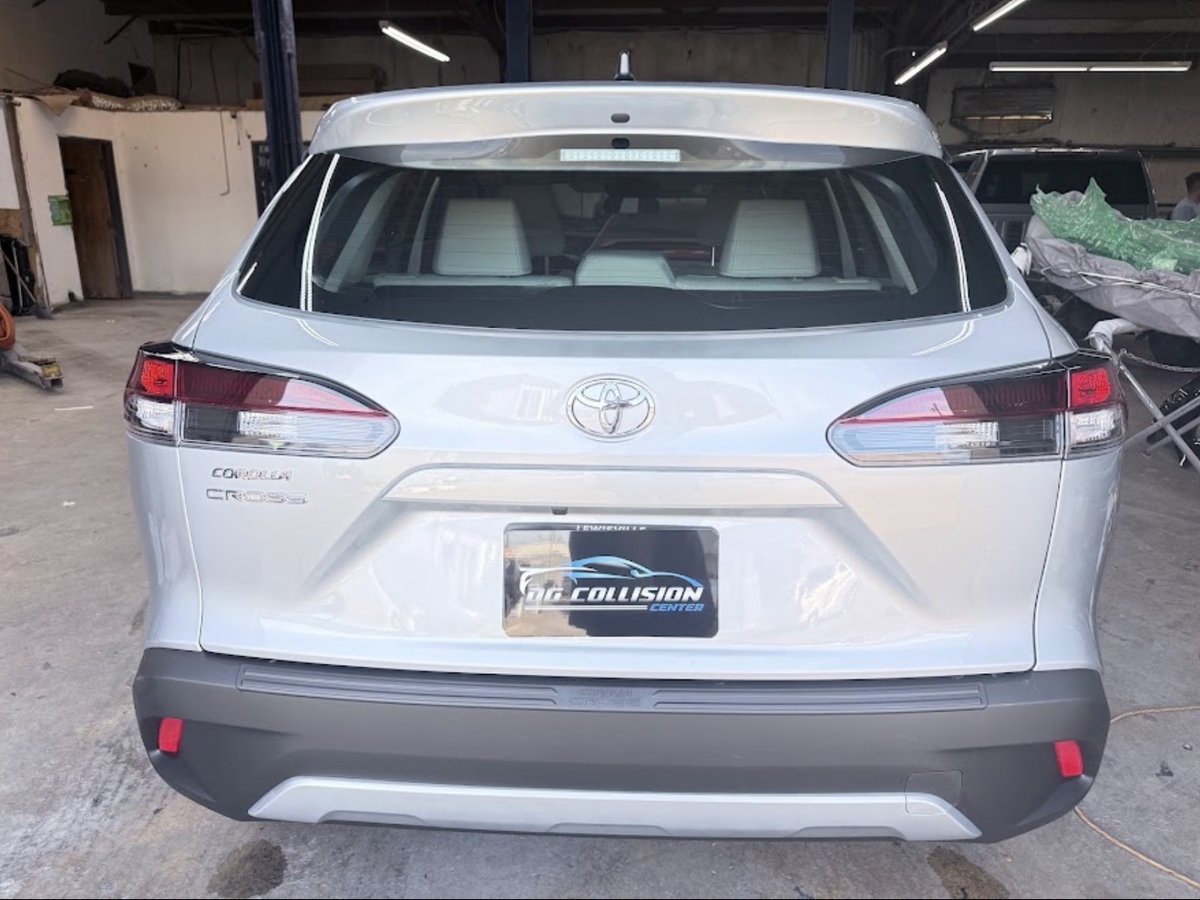
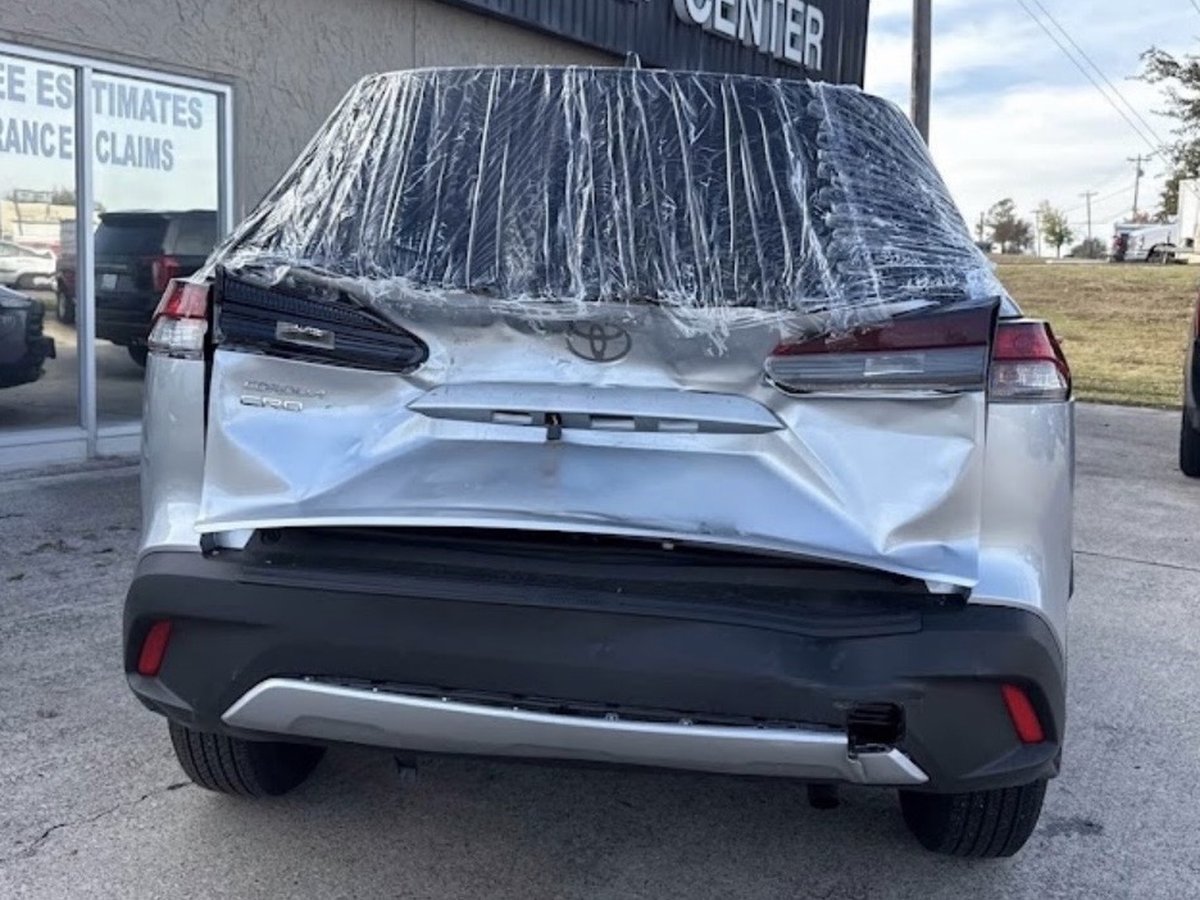
"T-boned on the Dallas North Tollway. Another shop said my frame was totaled. DG pulled it on their Blackhawk machine and measured it within spec — saved me from losing my car to a total-loss write-off. Three months later it drives perfectly straight."
PRECISION FRAME REPAIR
BACK TO FACTORY SPECS
Your frame is the difference between a car that protects you in the next collision and one that doesn't. We use computerized laser measuring — Blackhawk Korek frame machine with Hein-Werner SHARK electronic measuring — to pull, verify, and document every repair back to within 1mm of factory spec. Printed proof goes in your file.
YOUR FRAME IS A SAFETY SYSTEM — NOT A BUDGET LINE
A vehicle's frame (or unibody structure) is engineered to do one specific job in a crash: absorb the collision's kinetic energy in a predictable sequence, folding along designed crumple zones so the passenger compartment stays intact. When the frame is damaged in an accident and straightened incorrectly — eyeballed instead of measured, pulled on the wrong points, or repaired without proper anchoring — that predictable sequence breaks down. In the next collision the energy doesn't go where engineers intended; it goes into you.
This is why frame straightening is not a repair where you look for a budget option. A $400 frame pull at a shop without computerized measuring is usually worse than no repair at all — the vehicle looks straight but may be a quarter-inch out at critical control points, changing suspension geometry, tire wear, steering feel, and crash protection. Airbag deployment sensors are mounted at specific locations on the frame; shifted mounting points change deceleration readings and can delay airbag timing by milliseconds that matter.
Beyond safety, frame damage affects handling, tire life, and resale value. A half-inch of sidesway will drag a tire against the alignment specs every mile you drive — you'll replace tires early, fight the steering wheel on straightaways, and watch the vehicle pull to one side. Carfax and AutoCheck report prior structural damage, so a documented, measurable, verifiable repair is far more valuable at resale than an undocumented one. The NHTSA publishes consumer safety guidance on post-crash vehicle repair that specifically flags structural measurement as a must-verify.
Our structural repair is built around a simple principle: measure, pull, re-measure, pull again, print the proof. A Blackhawk Korek frame machine anchors the vehicle; a Hein-Werner SHARK computerized measuring system reads laser targets placed at factory reference points; the computer prints a damage map against published OEM specifications. We pull until the map is green. You keep the printout. Customers driving in from Highland Village and the wider 75077 corridor regularly bring us vehicles another shop declined to measure — every one of them leaves with documented proof the frame is back inside factory tolerance. Send us your damage photos and we'll give you an honest assessment before you commit to any shop.
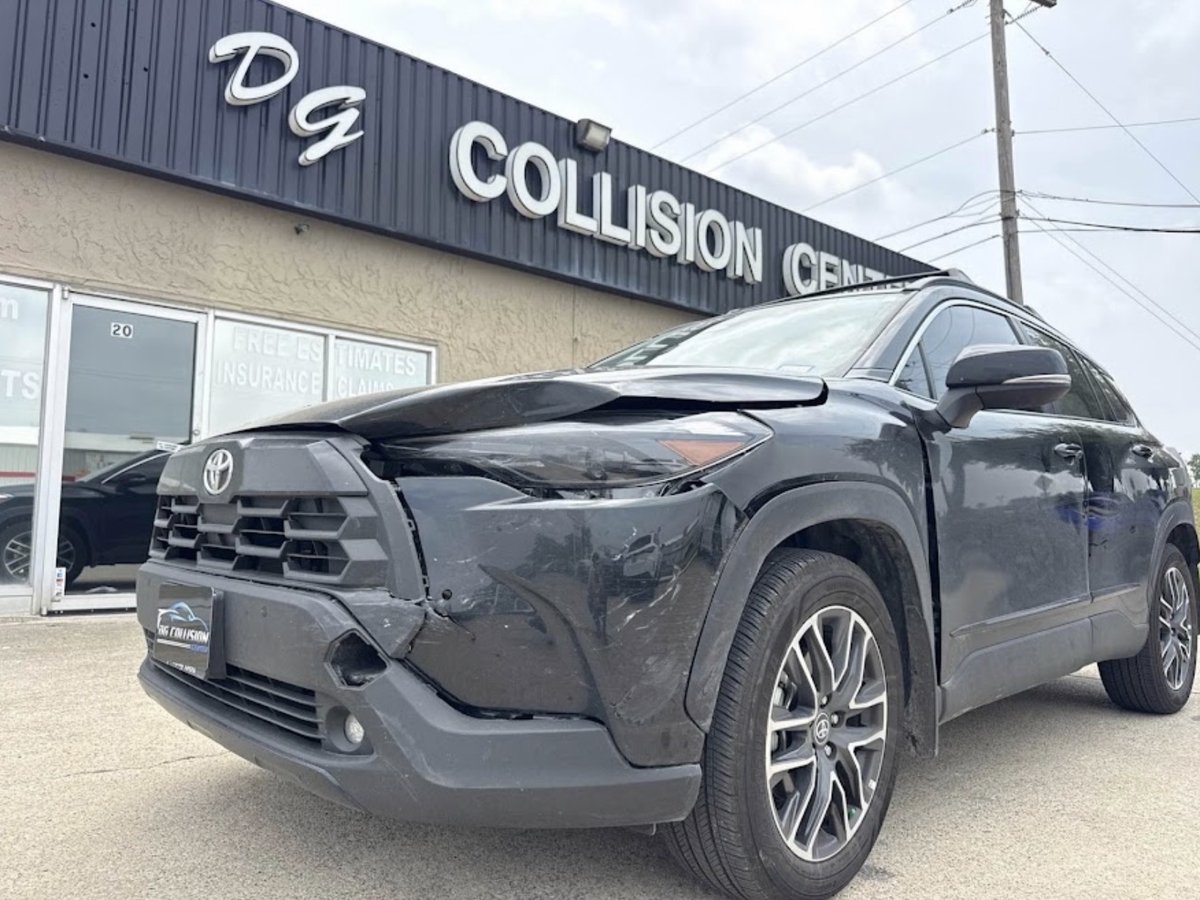
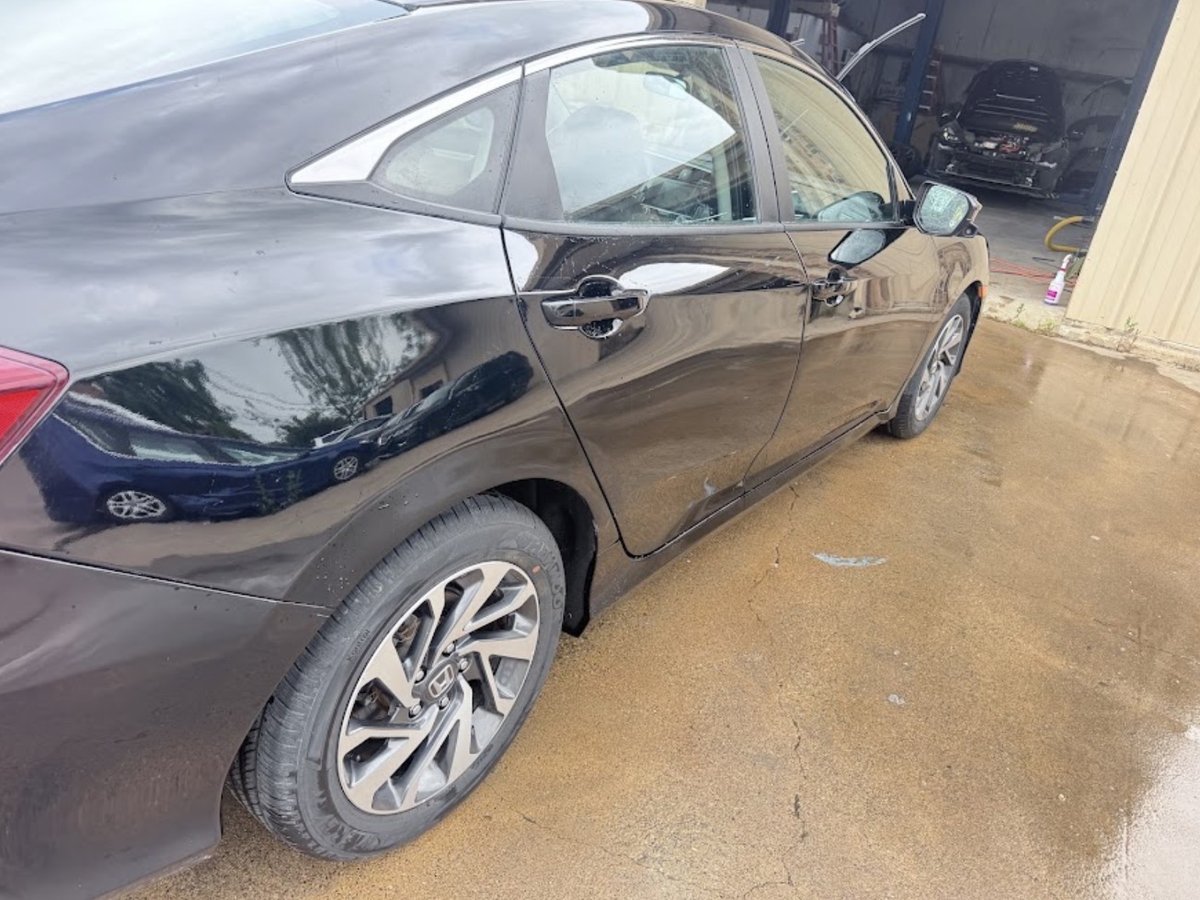
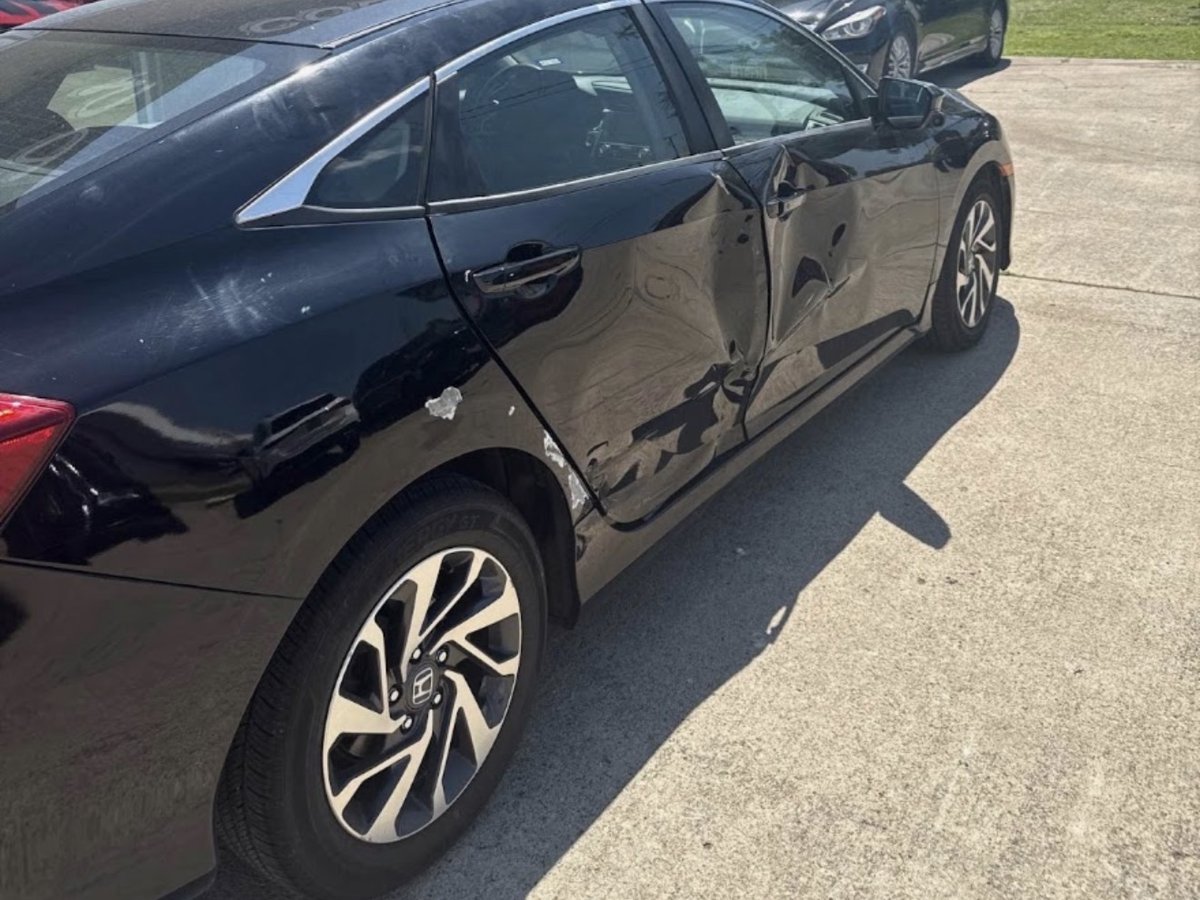
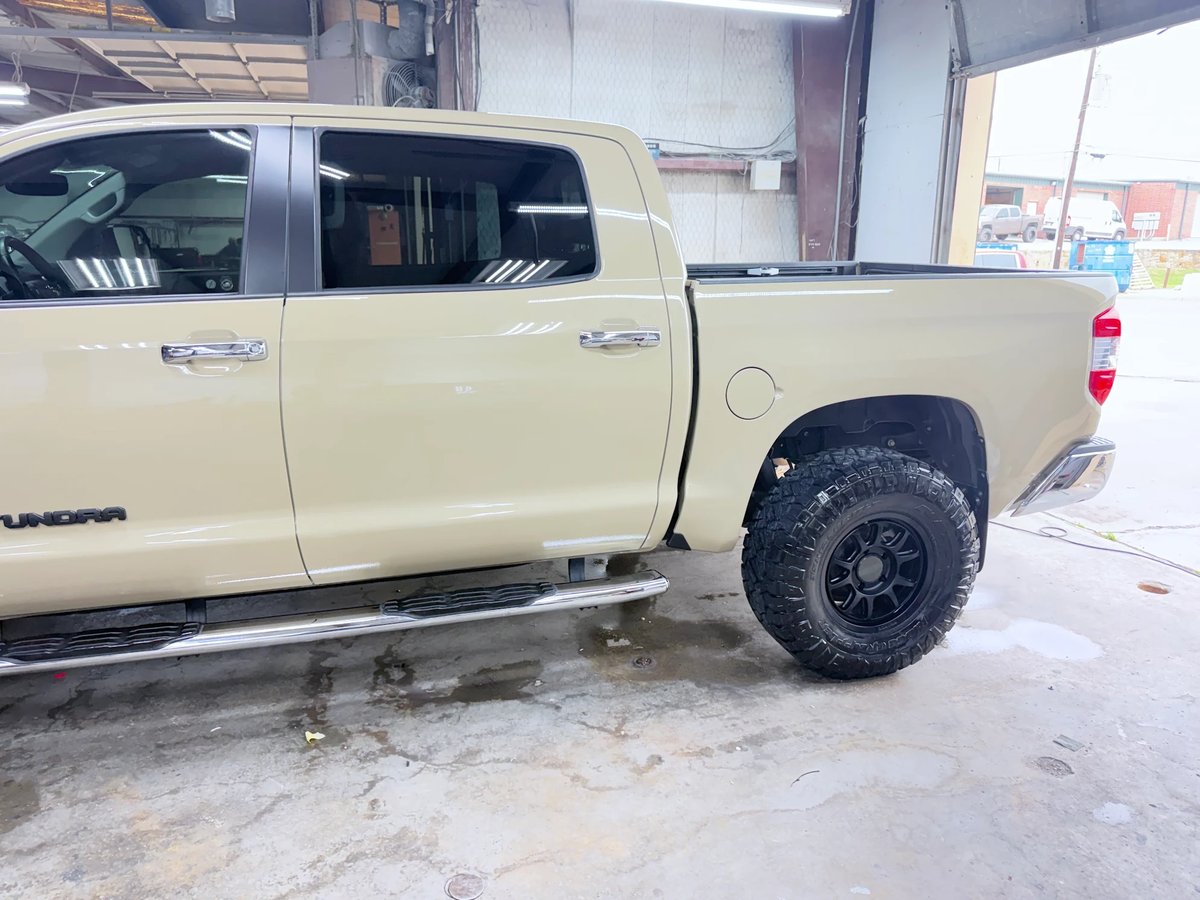
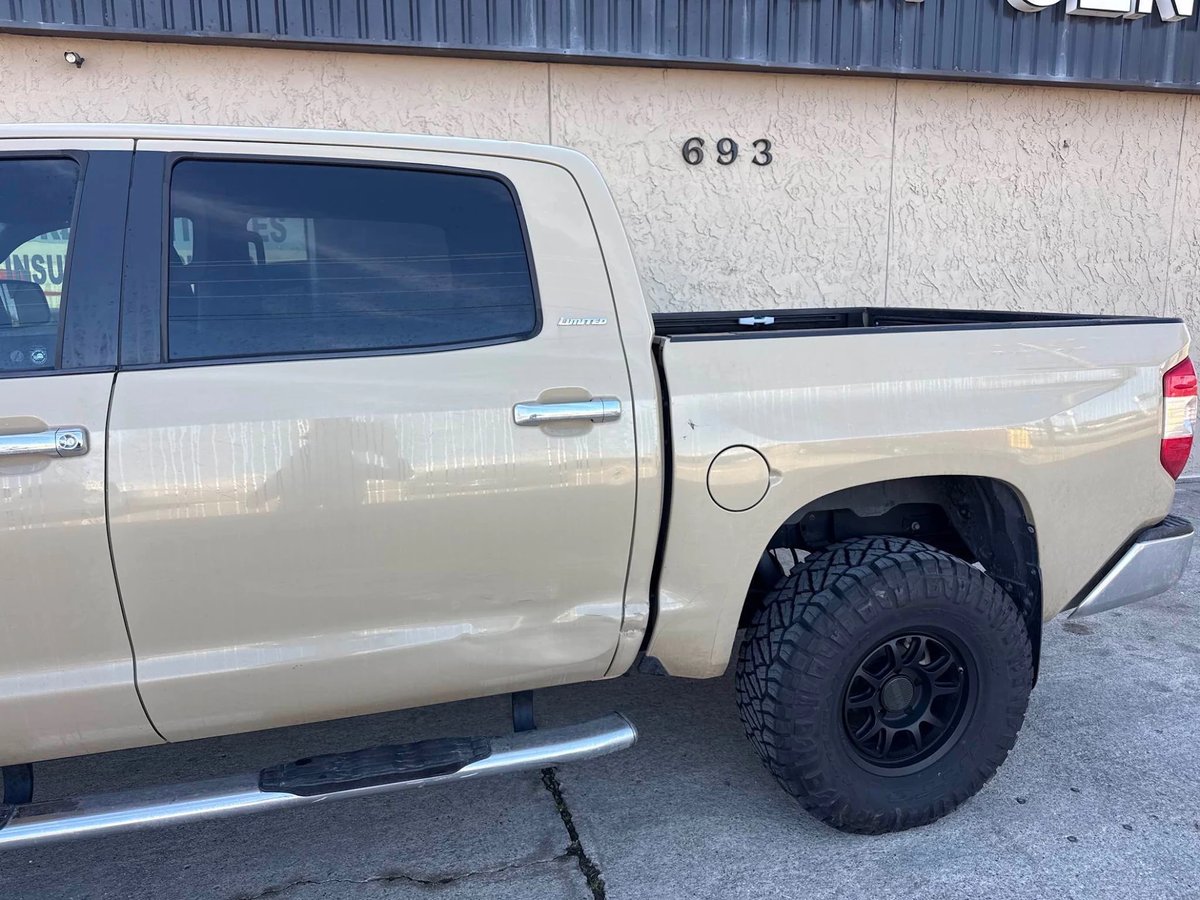
FRAME BEFORE & AFTER
Drag each slider to see the repair. Every vehicle here left our shop with a printed measurement report confirming factory spec.
Unibody Sedan · Side Impact
Plano · Sidesway + sag corrected to spec
Pickup Truck · Rear-End Impact
Flower Mound · Mash damage corrected
Crossover SUV · Diamond Damage
Frisco · Full structural realignment
WAS YOUR CAR JUST IN A SERIOUS COLLISION?
Free frame inspection, free tow within 30 miles. We print the measurements before any work begins.
THE EQUIPMENT BEHIND A PROPER FRAME REPAIR
A structural repair is only as good as the tools used to measure and verify it. Here's the specific hardware we invested in — the kind of gear general-purpose body shops skip because it's expensive and rarely needed if you only do cosmetic work.
Blackhawk Korek Frame Machine
Full-platform unibody and body-on-frame pulling system. Multiple hydraulic towers position around the vehicle to apply precise, multi-directional pulling force. Industry-standard anchoring platform for structural collision repair — equivalent to Car-O-Liner and Chief benches in capability class.
Hein-Werner SHARK Electronic Measuring
Computerized laser measuring system that reads reference points at the underbody, upper body, and engine bay. Compares every measurement to factory specification for your specific VIN. Prints a pre-repair and post-repair damage map you keep.
OEM Anchoring & Tie-Down Fixtures
Manufacturer-specific pinch-weld clamps and anchoring towers that secure the vehicle to the frame machine at its factory-engineered hold points. Without correct anchoring, pulling force shifts the whole vehicle instead of correcting the damage.
Structural Weld & Sectioning Tools
MIG and squeeze-type resistance spot welders calibrated for structural steels (mild steel, high-strength low-alloy, ultra-high-strength boron steel). When panel sectioning is the right call, we cut and re-weld at OEM-approved seam locations only.
Pre & Post-Repair Scanning
Full OBD-II diagnostic scan before teardown and after reassembly. Airbag sensors, ADAS modules, and steering/suspension codes get documented and cleared to OEM spec. Printed scan reports go in your repair file.
I-CAR Gold Class Certification
Shop-level certification from I-CAR — the North American collision-repair training authority. Our technicians hold individual Platinum certifications in structural, non-structural, refinishing, and electrical/mechanical disciplines.
TYPES OF FRAME DAMAGE WE REPAIR
Frame damage comes in five recognized patterns — every auto-body textbook and I-CAR training covers them. Most real-world collisions produce a combination of two or three. Our measuring system identifies each one individually and shows us exactly how much of each is present.
Sag
Front or rear of the vehicle pushed downward. Most common after a nose-in or tail-in impact. The center of the vehicle appears to ride higher than the ends. Pulls the suspension out of alignment and changes ride height.
Mash
Front-to-back compression — the frame is shorter than factory spec. Typical of head-on collisions. Engine bay or trunk crumple zone has folded; control points that should be, say, 98 inches apart are now 96.5 inches apart.
Sidesway
Side-to-side misalignment — the frame is pushed laterally. Caused by angled impacts and T-bones. The vehicle's centerline shifts; doors may no longer align with the roof; steering may pull persistently to one side even after alignment.
Twist
Diagonal misalignment — one corner of the frame is higher or lower than the opposite corner. Caused by rollover or severe off-angle impacts. Hardest to spot visually; the vehicle may look level but rides on only three corners of the suspension.
Diamond
Parallelogram shape — one side of the frame shifted forward or backward relative to the other. Severe damage pattern, usually from off-center frontal impact. Wheelbase on one side is longer than the other; steering angles and suspension alignment are non-correctable until the diamond is pulled out.
Not every collision produces frame damage. Many fender-benders damage only the outer body panels. But any impact at 25 mph or higher, any rollover, or any collision where the airbags deployed should get a computerized frame measurement — even if the outside looks fine.
HOW WE PULL, MEASURE, VERIFY
Computerized Damage Assessment
The vehicle is inspected on the lift and under it. Visible damage is documented with timestamped photos; hidden distortion gets flagged for measurement. Full OBD-II diagnostic scan captures airbag, ADAS, and suspension codes before any teardown begins. We decode the VIN to pull the specific factory reference specification for your exact year/make/model.
Vehicle Anchoring on the Frame Machine
The vehicle is driven (or towed) onto the Blackhawk Korek platform and secured at its factory pinch-weld points using OEM-specific clamps. Anchoring must be rock-solid — without it, pulling force shifts the whole car instead of correcting the damage. This step alone takes 30–60 minutes on a serious frame repair. It's not optional.
Laser Measurement Against Factory Specs
Hein-Werner SHARK laser targets are placed at factory control points on the underbody, upper body, and (where needed) engine bay. The computer compares current dimensions to published factory specs and produces a damage map — a printed diagram showing exactly where, in which direction, and by how many millimeters each reference point is out of spec. Pre-repair printout goes in the file.
Precision Pulling and Alignment
Hydraulic towers are positioned at the damage map's indicated pull points. Pulling force is applied slowly and in the reverse sequence of the collision — damage that happened last gets undone first. Pull loads are calibrated to the specific structural steels in your vehicle; ultra-high-strength boron steels require different force profiles than mild steel. No heat is applied to hardened structural members (that would ruin the metal).
Re-Measurement Verification
After every major pull, the SHARK system re-measures. We pull, measure, pull, measure — iterating until every single factory reference point reads within 1mm of spec. Some repairs take one pull cycle; complex ones take six. The measurement computer doesn't care how many cycles it takes; it only releases the vehicle when the numbers are right.
Final Quality Control & Documentation
Final full-frame laser measurement is captured and printed — the post-repair damage map goes in your file next to the pre-repair one. A second OBD-II scan clears all codes; ADAS cameras and radars are recalibrated to OEM spec. Test drive, four-wheel alignment verification, visual inspection of door gaps, trunk fit, and ride height confirm everything looks and drives factory-correct before delivery.
NOW YOU KNOW WHAT PROPER LOOKS LIKE.
Not every shop measures. We do, we print it, and we put it in your file. Get your free inspection — takes 15 minutes.
HOW MUCH DOES FRAME REPAIR COST?
Ranges below are ballpark guidance only. The overwhelming majority of frame repair jobs we handle are paid through insurance — you pay your deductible, we handle the claim and supplements. Exact pricing requires a computerized inspection and teardown.
Going through insurance? You pay your deductible (if any) — we bill the carrier directly. Free loaner vehicle and free towing within 30 miles included on all frame repair jobs.
VEHICLES WE STRAIGHTEN
From work trucks to weekend supercars. Body-on-frame, unibody, aluminum-intensive, steel — our Blackhawk Korek machine anchors them all and the SHARK measuring system reads factory specs for every VIN we service.
Ford F-150 / F-250 / F-350
Body-on-frame ladder chassis (and aluminum cab from 2015+). Rear-end impacts, rollovers, tow-damage to the rear frame rail. Common DFW truck frame repair — we see dozens a year.
Chevy Silverado / GMC Sierra
GM body-on-frame repair with fully-boxed frame rail straightening. Mash and sag corrections on the ladder, cab alignment verification, bed-to-cab gap check.
Toyota Tundra / Tacoma
Toyota body-on-frame trucks with high-strength steel frame reinforcements. Factory-spec pulling force required — we work from Toyota OEM repair procedures for your specific VIN.
RAM 1500 / 2500 / 3500
Ram trucks — steel and high-strength steel ladder frame. Heavy-duty towing damage, collision-induced frame twist, and cab-to-bed alignment corrected and measured.
Unibody Sedans (All Makes)
Camry, Accord, Altima, Civic, Corolla, Malibu, Fusion, Charger, Challenger, 3-Series, A4, C-Class. The body IS the frame — precision measurement matters more here than anywhere else.
Crossover & SUV Unibody
RAV4, CR-V, Rogue, Equinox, Explorer, Highlander, Pilot, Escape, X3, X5, Q5, Q7, GLC, GLE. Unibody construction with integrated frame — door-gap and roof-seam alignment are pass/fail.
Luxury & Exotic (All)
Porsche, Mercedes-Benz, Audi, BMW, Range Rover, Jaguar, Corvette, Ferrari, Lamborghini. Factory-specific anchoring fixtures, OEM procedure access, discrete handling.
Don't see your vehicle? Call (972) 219-0864 — if we can't measure it, we'll refer you honestly to a shop that can.
FRAME VS. UNIBODY EXPLAINED
Most modern passenger cars and crossovers are unibody. Most full-size trucks and body-on-frame SUVs (Tahoe, Expedition, 4Runner, Sequoia) are body-on-frame. Both require frame straightening after structural damage, but the repair process is meaningfully different.
Body-on-frame has a separate steel ladder frame that the body bolts onto. The frame carries all the structural load; the body is essentially a decorative shell riding on top. Frame damage on a body-on-frame truck is often isolated to the ladder frame itself — pull the ladder back into spec and the body follows.
Unibody integrates the frame into the body shell as a single welded structure. The sheetmetal IS the frame. That means any misalignment shows up in multiple places at once: door gaps open or close, trunk won't latch, glass doesn't sit right, roof seams look off, hood gaps shift. Unibody repair demands even more precision because a 3mm error at one reference point can telegraph into 10+ visible alignment issues across the vehicle. This is exactly why computerized measuring and factory-spec anchoring are non-negotiable on unibody work.
We repair both construction types using the same Blackhawk Korek machine and Hein-Werner SHARK measuring system. The specific anchoring fixtures, pull sequences, and factory reference specs differ by vehicle — which is why VIN-specific OEM procedure access matters. Generic "any-truck-will-do" clamps and eyeball measurement are how frames get delivered out-of-spec and stay that way.
WARNING SIGNS YOUR FRAME MAY BE DAMAGED
Frame damage often hides behind a car that "looks fine." If you've been in any collision — even a minor-seeming one — and notice any of these, get a computerized frame inspection. Ours is free.
Uneven tire wear
One tire wearing faster, or wearing unevenly across its tread, points to a suspension geometry issue — often caused by frame misalignment after a collision.
Car pulls to one side
Persistent pull to the left or right on a straight, level road — especially after a four-wheel alignment — suggests frame or unibody damage that alignment alone can't correct.
Unusual noises when driving
Creaks, groans, or metallic pops from the body when you go over bumps, turn, or brake. Healthy frames don't talk; damaged ones do.
Doors or trunk don't close properly
Doors that need to be slammed, trunks that won't latch on the first try, hood that sits unevenly — these are classic unibody misalignment signs.
Suspension issues after a collision
New clunks, bottoming out, uneven ride height, steering wheel off-center when driving straight. Suspension mounts attach to the frame — if the frame shifted, the suspension shifted with it.
Visible bends or creases in frame rails
Bend down and look at the frame rails from the side and from underneath. Any kink, bulge, or paint-line crease on a structural member is a flag — have it measured before you drive it.
Uneven gap lines between panels
Stand in front of the car and check hood-to-fender gaps side-to-side. Then the same at doors and trunk. Factory-built vehicles have symmetrical gaps; frame damage breaks that symmetry visibly.
Steering wheel not centered
Steering wheel sits tilted left or right even when driving straight. Could be a simple alignment issue — but after a collision, it's often frame-related and won't be fixed by alignment alone.
Seeing any of these? Don't wait and don't keep driving it if you can avoid it. A 15-minute computerized measurement tells you exactly what's going on. If the frame is fine, we'll say so and you can move on. If it's not fine, at least you know.
FROM DFW DRIVERS WHO NEEDED FRAME WORK
"Truck frame got bent after a rear-end. Two shops wouldn't touch it. DG had the Korek frame machine and the computerized measuring to actually verify the repair was correct. Alignment came back perfect on the first try at the tire shop."
"Worried sick about frame damage after a highway crash on 121. DG walked me through the measurement printout — before and after — and showed me exactly what the laser was reading. Transparent and honest."
"Side-impact collision pushed my unibody sideways. DG anchored the whole car and pulled it back into factory spec. Insurance adjuster was impressed with their documentation. Lifetime warranty gives real peace of mind."
"Towed my Silverado in after a bad rear-end on I-35W. Three shops said 'total it.' DG measured the frame, showed me exactly what was bent, and came back under my insurance's total-loss threshold. Drove away two weeks later, tracks perfectly straight."
"Porsche Cayenne after a parking-garage crunch. Had to be measured for structural damage before Porsche would approve the warranty claim. DG had the fixtures, the SHARK, and the printout Porsche needed. Saved the warranty and the car."
DON'T LET AN INSURER TOTAL A REPAIRABLE CAR.
Second opinions save thousands. Measured pre-repair estimates prove the vehicle is economically repairable.
TERMS WORTH KNOWING
If your estimate or an adjuster uses any of these, here's what they actually mean.
- Anchoring Setup
- Securing the vehicle to the frame machine at its factory pinch-weld points using OEM-specific clamps. Without correct anchoring, pulling force shifts the whole vehicle rather than correcting the damage. Non-negotiable first step on any structural repair.
- Control Point Measurement
- A specific location on the frame with a published factory dimension. The computerized measuring system places a laser target at each control point and compares the reading to the manufacturer's spec. Modern cars have 20–40 control points.
- Crumple Zone Structural
- An engineered section of the frame designed to deform predictably in a collision, absorbing kinetic energy so the passenger compartment stays intact. A repaired crumple zone must match factory spec or the next crash won't behave the way engineers intended.
- Datum Line Reference
- The horizontal and vertical reference plane used to measure frame dimensions. Shifts in the datum line indicate frame distortion in specific directions. Used by the SHARK measuring system to produce the damage map.
- High-Strength Steel HSS/UHSS
- Structural steels used in modern unibody construction. Ultra-high-strength boron steel is common in roof rails and A/B pillars. These steels cannot be heated during repair — heat destroys the strength. Cold pulling with calibrated force is the only correct method.
- OEM Repair Procedure OEM
- The vehicle manufacturer's published, authoritative method for your specific VIN. Using OEM procedures is a warranty and safety requirement on modern vehicles. We subscribe to OEM repair databases for Tesla, Ford, GM, Toyota, Honda, BMW, Audi, JLR, and more.
- Sectioning Panel Repair
- Cutting out a damaged section of a structural member and welding in a factory replacement part at an OEM-approved seam location. Used when the damage exceeds what pulling alone can correct. Not all panels are sectionable — OEM specs dictate which sections can be repaired vs replaced whole.
- Unibody Construction
- Vehicle architecture where the body shell and frame are a single welded structure. The opposite of body-on-frame. Most modern passenger cars, crossovers, and some newer trucks are unibody. Structural repair demands greater precision since the sheetmetal IS the frame.
FRAME REPAIR FAQ
Yes — most bent frames can be straightened back to factory specification when repaired by a shop with computerized measuring equipment and proper anchoring. A Blackhawk Korek frame machine combined with a Hein-Werner SHARK electronic laser measuring system is the standard. The key is that the shop must measure before AND after the pull, not just eyeball it. Shops without measuring equipment cannot verify the frame is back within spec and should not be trusted with structural work. If the frame damage is severe enough that stretching or pulling would fatigue the metal beyond its structural tolerance, replacement sections may be required instead — but that decision must come from actual measurement data, not a visual guess.
Usually no. A damaged frame changes how the vehicle absorbs impact in a future collision — crumple zones designed to fold predictably may fold into the passenger compartment instead. Suspension geometry also changes, which affects steering, braking, and tire wear. If the damage is obvious (pulled alignment, unusual noises, sagging stance) call us for a free inspection and we'll tow the vehicle in for free within 30 miles. If you have any doubt, don't drive it — driving on a bent frame is one of the most under-recognized risks in post-collision vehicle safety.
Yes, prior structural damage is reported on Carfax and AutoCheck regardless of repair quality, and that does affect resale value. However, a properly documented frame repair — with printed pre- and post-repair measurements, OEM-procedure compliance, and a lifetime workmanship warranty — is far more valuable at resale than an undocumented or improperly-repaired vehicle. We provide complete repair documentation so you (or a future buyer) can prove the work was done correctly. Many dealers and private buyers will accept a well-documented frame repair at minimal value reduction; they walk away from the vehicles with no paperwork.
Frame straightening alone typically takes 1–3 days on the machine. The overall repair timeline — which usually includes body panel work, paint, and ADAS recalibration — runs 1–3 weeks for moderate damage and 3–6 weeks for severe structural damage requiring sectioned panel replacement. Our shop gives you a written timeline with milestone updates; if parts delays extend the job, we tell you immediately and provide a free loaner vehicle.
Yes. All major carriers (State Farm, GEICO, Progressive, Allstate, USAA, Farmers, Liberty Mutual) cover frame and structural repair when the damage results from a covered collision or comprehensive event. You pay your deductible and the carrier pays the rest. If your insurer suggests the vehicle should be totaled, get a second opinion — a measurable repair plan with documented costs often proves the vehicle is economically repairable even when a drive-by estimate says otherwise. We negotiate supplements with carriers regularly and handle the claim paperwork so you don't have to.
A traditional body-on-frame vehicle (most full-size trucks, body-on-frame SUVs like Tahoe and Expedition, and older cars) has a separate steel ladder frame that the body bolts onto. A unibody vehicle (nearly every modern passenger car, most crossover SUVs, and an increasing share of trucks) has the frame integrated into the body shell as a single welded structure. Both require frame straightening, but unibody repair demands more precision — because the body IS the frame, misalignment shows up as door-gap issues, trunk closure problems, roof-seam gaps, and glass fitment issues. We repair both using the same Blackhawk Korek machine and SHARK electronic measuring.
Ask for the printed laser measurements — before the repair and after. A legitimate structural shop produces a computer-generated damage map that shows exactly how far each reference point was out of spec before the pull and how close to factory spec each point is after. We hand you a copy of that printout in your repair file. If a shop can't produce printed measurements, they didn't actually measure — they eyeballed it and hoped, which is not acceptable on a frame repair. You can also verify accuracy with a post-repair four-wheel alignment check at any alignment shop; a properly-straightened frame aligns within factory spec on the first try.
Yes, indirectly. Airbag deployment depends on crash sensors reading specific deceleration patterns as the vehicle's crumple zones deform predictably. If the frame was previously damaged and not repaired to spec, the crumple zones may fold irregularly, changing the deceleration signal and potentially causing improper deployment timing. Additionally, sensor mounting points can shift on a damaged frame, so after any structural repair we scan the vehicle pre- and post-repair and recalibrate ADAS and safety systems to OEM spec. This is exactly why printed measurement verification matters — it's not just about how the car drives, it's about how it protects you in the next crash.
FRAME STRAIGHTENING FOR DFW-WIDE DRIVERS
One of a handful of DFW shops with both a Blackhawk Korek frame machine and a Hein-Werner SHARK electronic measuring system under one roof. Customers drive (or we tow) from every corner of the metroplex.
If your vehicle isn't safe to drive, don't drive it. Call us — we'll dispatch a flatbed tow within 30 miles at no cost as part of your repair.
MORE AT DG COLLISION
Collision Repair
Full-service collision repair including frame work, body panels, paint, and ADAS calibration. Insurance direct with every major carrier in Texas.
Learn more →Aluminum Body Repair
Isolated aluminum bay for Ford F-150, Tesla, BMW, Audi, Porsche, Mercedes, Corvette, Ferrari, Lamborghini, Range Rover and Jaguar.
Learn more →Tesla Body Shop DFW
Model 3, Y, S, X. Pearl White Multi-Coat match, HV-safe structural repair, Tesla OEM procedures, ADAS recalibration.
Learn more →Paint & Refinishing
PPG waterborne paint, spectrophotometer color match, baked downdraft booth. Lifetime warranty on all refinish work.
Learn more →Hail Damage Repair
Paintless dent repair (PDR) and hail claim specialists. $0 out-of-pocket on qualifying comprehensive claims.*
Learn more →Free Estimate
Send photos online, get a real estimate back within 15 minutes during business hours. Insurance-approved or cash-pay.
Learn more →GET A COMPUTERIZED FRAME ASSESSMENT
Send details and damage photos. We'll respond within 15 minutes during business hours with an honest assessment and whether a physical inspection is worth your time. Tow within 30 miles included if we perform the repair.
*$0 out-of-pocket applies to qualifying comprehensive hail claims only (not collision). Frame repair pricing varies by damage extent, vehicle, and required parts. Insurance deductibles apply per your policy. Free towing within 30 miles when repair work is performed.